
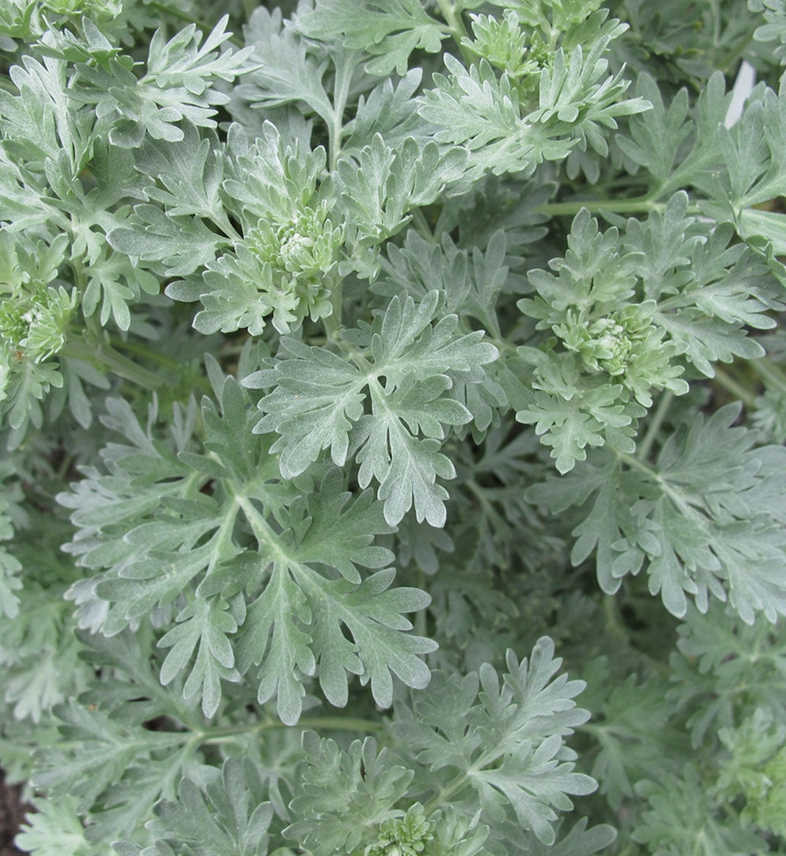
Artemisia absinthium
Actions:
Abortifacient, Anthelmintic, Anti-inflammitory, Digestive Stimulant, Emmenagogue
Therapeutic Categories:
Digestive bitter, arthritis, stimulate sweating, increase sexual desire, used to treat quinine-resistant malaria,
Safety:
Do not use if pregnant or epileptic (may induce seizures)
Magical Uses:
Third eye: enhancing psychic abilities and divination
Throat: relieve anger, and allow the user to vent it in a more peaceful way. It can also be used in magic to prevent strife or war.
Plant Parts Used: Leaf
Preparations: Used in teas, tinctures, spirits
Energetics: Bitter
Notes:
very bitter, balance taste, use minimally
________________________________________________________
Plant Identifiers: Perennial herbaceous plant with a woody stem. typically have many small greenish yellow flower heads grouped in clusters. The leaves are usually divided and alternate along the stem; they may be green, grayish green, or silvery white.
Also known as: Artemisia, absinth sage, absinth wormwood, absinth sagewort, common sagewort, absinthe mugwort, absinthium.
Etymology: Named after the Greek goddess, Artemis; the goddess of hunting and childbirth, belongs to the family of Compositae, a group consisting of 180 species. Many artemisia varieties have insecticidal properties, wormwood being the most potent.
Chemical Constituents: absinthin, thujone, isothujone, thujyl alcohol and its esters, chamazulene and other mono- and sesquiterpenes