Hypericum perforatum
Actions:
Anti-depressant, anti-anxiety, Antiecchymotic, Local Anesthetic, Anodyne
Therapeutic Categories:
ADHD, depression, anxiety, menopausal symptoms, obsessive-compulsive disorder, behavioral issues, psoriasis, wounds, bruises, and muscle pain.
Safety:
Do not use with birth control, anxiety or depression medication, check with doctor before use, may interact with many medications.
Magical Uses:
Protection, healing, and banishing negative energies. Believed to capture the sun’s energy
Plant Parts Used: Flowers, leaves, stems – flowers most valuable
Preparations: Teas, tinctures, salves, decoction
Energetics: bitter, dry, warm
Notes:
taken orally for up to 12 weeks in appropriate doses
__________________________________________
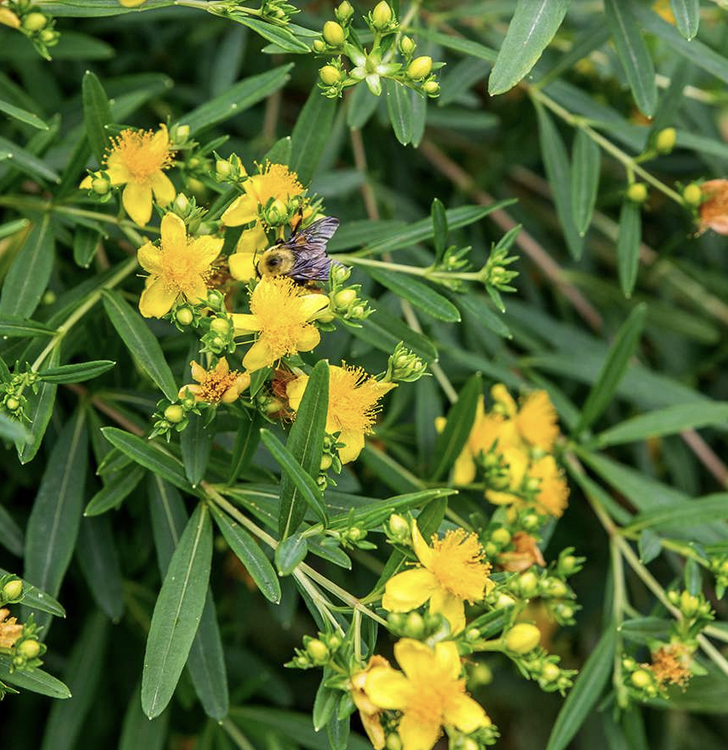
Plant Identifiers: Perennial, yellow flowers with black glands around their edges, long stamens, and three pistils. Red staining liquid present in flower buds. Leaves yellow-green, scattered translucent dots visible when held up to the light.
Also known as: devil’s scourge, Lord God’s wonder plant, and witch’s herb, balm of the warrior’s, penny John, rosin rose, touch-and-heal, Tipton-weed, goatweed, or Klamath weed
Etymology: often blooms on the birthday of the biblical John the Baptist
Chemical Constituents: hypericin, pseudohypericin (naphthodianthrones), hyperforin, sesquiterpenes