
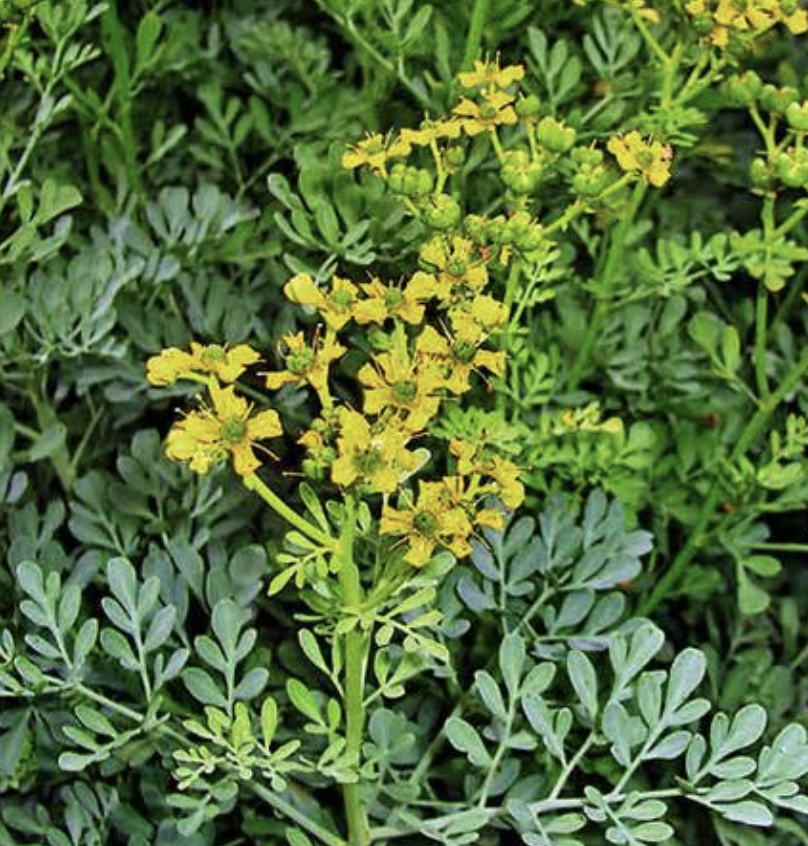
Ruta graveolens
Actions:
Culinary, Abortifacient, Emmenagogue
Therapeutic Categories:
insect repellent and incense, When combined with sugar, it is traditionally used to soothe eye discomfort and alleviate the symptoms of a mild cold. Additionally, inhaling ruda is thought to mitigate the effects of shock.
Safety:
Should be avoided by pregnant women or women who have liver issues. Can burn skin,
Magical Uses:
believed to possess protective qualities against malevolent forces, black magic & the evil eye.
Plant Parts Used: Leaves
Preparations: culinary herb, incense, tea
Energetics: Bitter
Notes:
Use only in small doses, poisonous
_________________________________________
Plant Identifiers: leaves are oblong, blue green and arranged pinnate. Flowers are small with 4 to 5 dull yellow petals in clusters.
Also known as: herb-of-grace
Etymology: Symbolism across many cultures/histories. Rue is well known for its symbolic meaning of regret and it has sometimes been called “herb-of-grace” in literary works. In mythology the basilisk, whose breath could cause plants to wilt and stones to crack, had no effect on rue. Weasels who were bitten by the basilisk would retreat and eat rue in order to recover and return to fight.
Chemical Constituents: furanoacridones and two acridone alkaloids (arborinine and evoxanthine), coumarins and limonoids.