
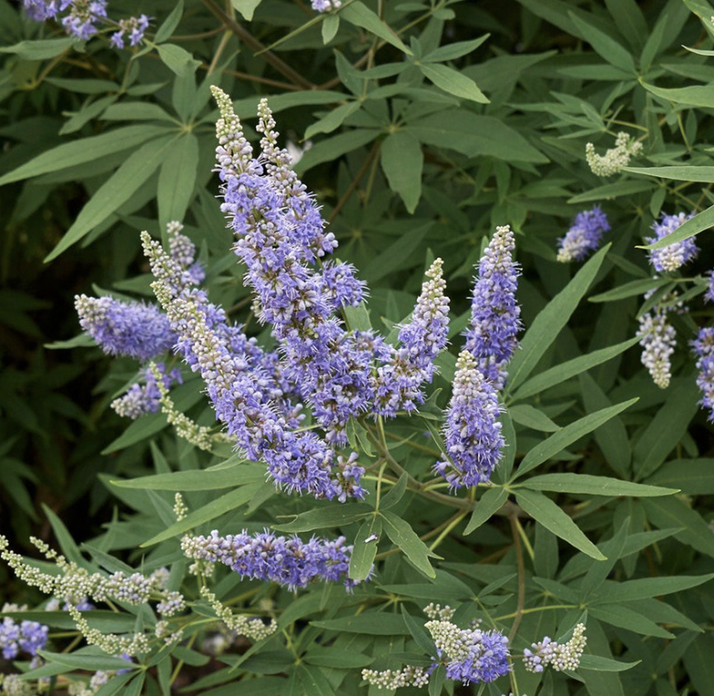
Vitex agnus-castus
Actions:
anaphrodisiac, abortifacient
Therapeutic Categories:
Hormone regulation, menstural cycle, bone repair (paired with magnesium)
Safety:
Adverse effects from Vitex can include nausea, headache, gastrointestinal discomfort, menstrual discomfort, fatigue, and skin disorders. People taking dopamine-related medications or Parkinson’s disease medications should avoid using chasteberry. Women on birth-control pills, hormone-replacement therapy, or having a hormone-sensitive condition, such as breast cancer, are advised not to use chasteberry. Use of Vitex is discouraged for pregnant or breastfeeding women, and for children
Magical Uses:
Balance sexuality, increase fertility & sex drive, stop unwanted advances
Plant Parts Used: Essential oils have been found in the fruits and in the leaves
Preparations: tea, tincture, essential oil
________________________________
Plant Identifiers: Purple cone flowers, leaves resembling pot leaves (5 points).
Also known as: vitex, chaste tree / chastetree, chasteberry, Abraham’s balm, lilac chastetree, or monk’s pepper
Etymology: considered to be sacred to the virginal goddess Hestia/Vesta
Chemical Constituents: Flavonoids (vitexin, casticin), iridoid glycoside (agnuside, aucubin), p-hydroxybenzoic acid, alkaloids, essential oils, fatty oils, diterpenoids and steroids