
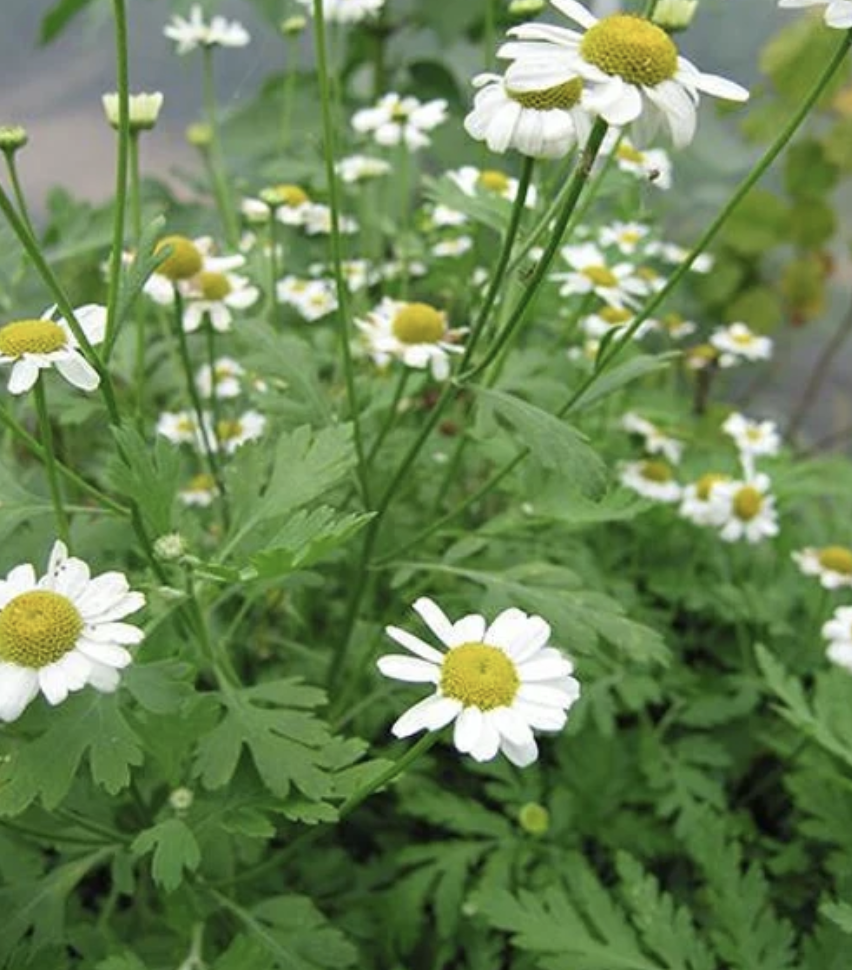
Tanacetum parthenium
Actions:
Anti-inflammatory, Antiseptic, Insecticide
Therapeutic Categories:
Migraines, Menstrual Pain, Arthritis (not rheumatoid), Ashtma, Insect Bites
Safety:
If taken for long periods of time can cause withdrawal symptoms upon stoppage. Can irritate skin or mouth. Do not use if pregnant or on blood thinners. Can also cause gastrointestinal distress.
Magical Uses:
Protection and purification: Feverfew is planted around the home for protection and purification.
Amulets: In ancient folklore, an amulet of feverfew was worn to prevent head afflictions and to keep one’s bearings.
Plant Parts Used: Leaves
Preparations: Tea, Tincture, Salve
______________________________________________
Plant Identifiers: Leaves are light yellow-green, variously pinnatifid. Daisy-like flowers, outer, ray florets have white ligules and the inner, disc florets are yellow and tubular. It spreads rapidly by seed, and will cover a wide area after a few years. The plant produces achene fruit, and grows in stony slopes and river beds
Etymology: The word feverfew derives from the Latin word febrifugia, meaning ‘fever reducer’, although it no longer is considered useful for that purpose.
Chemical Constituents: parthenolide camphor, parthenolide, luteolin, and apigenin flavenoids