Melissa Officinalis
Actions:
Antithyroid, mild sedative, antidepressant, antioxidant, cardioprotective, antbacterial, antimicrobial, antifungal, antiinflammitory
Therapeutic Categories:
Calming, anti-depressant
Safety: Do not use if thyroid conditions exist
Magical Uses:
Sacral chakra, self love, bright citris notes enlighten and mellow simultaneously
Plant Parts Used: Leaf, flower
Preparations:
Used in teas, tinctures, balms
Energetics: Cooling
Notes:
Personally love the effects of this herb, however need to avoid due to thyroid condition
_________________________________________________________________________
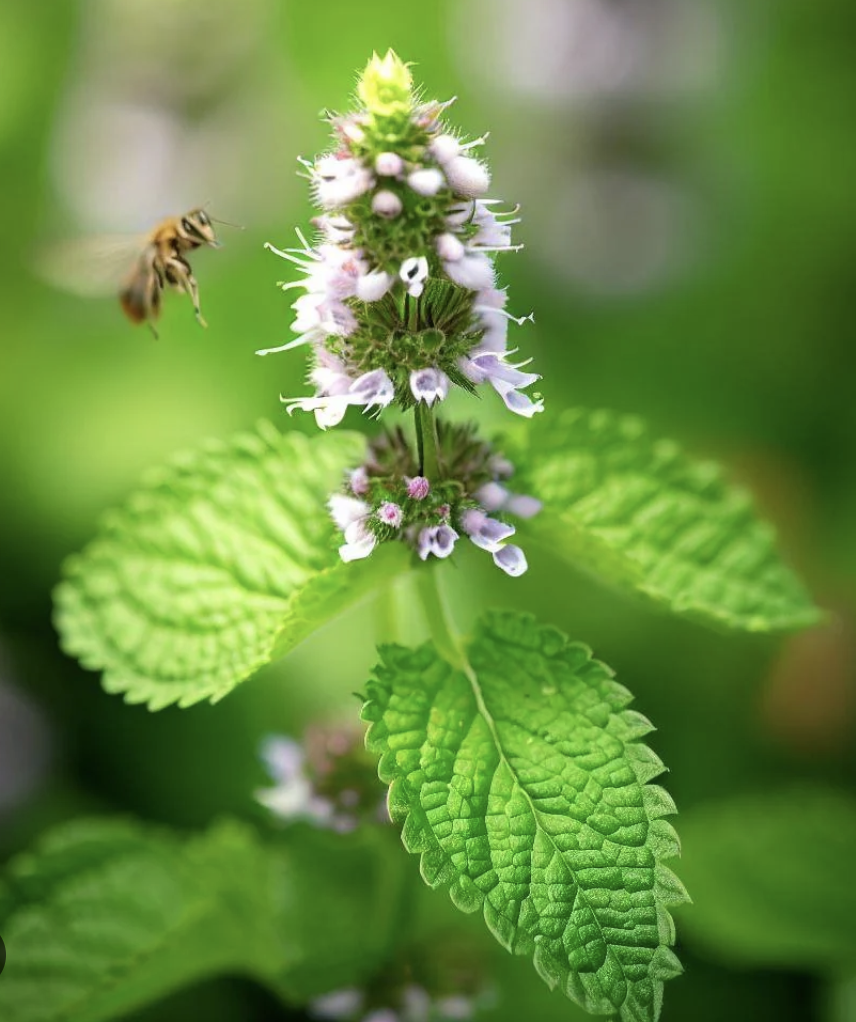
Plant Identifiers: Mint family – square stem. Heart-shaped leaves, rough, veined surface; soft and hairy with scalloped edges, and have a mild lemon scent. During summer, small white or pale pink flowers appear. Plants live for ten years; the crop plant is replaced after five years to allow the ground to rejuvenate.
Also known as: Bee balm, Honey balm, Melissa balm, Heart’s delight, English balm, Bush balm, and Honey plant.
Etymology: This herb’s genus gets its name from the Greek word for “honey bee;” lemon balm attracts bees. The word “balm” is derived from the Greek word “balsamon” which means “balsam,” an oily, sweet smelling resin.
Chemical Constituents: (E)-Caryophyllene; Caryophyllene oxide; Citronellal; Geranial (citral A) ; Geranyl acetate; Neral (citral B); a-Cadinol; a-Copaene; b-Caryophyllene