
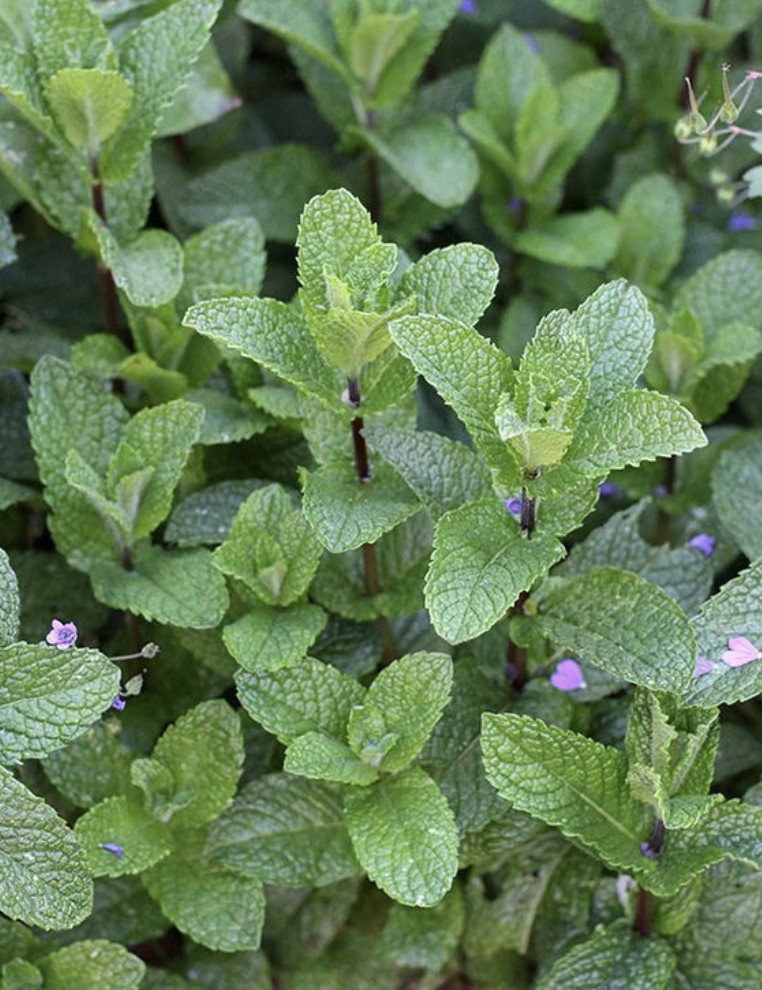
Mentha
Actions:
Antioxidant, astringent, antifungal, antiyeast, antiviral, anticancer, anti-inflammatory, nutritive, Antiemetic, culinary
Therapeutic Categories:
biliary disorders, dyspepsia, enteritis, flatulence, gastritis, intestinal colic and for spasms of the bile duct, gallbladder and gastrointestinal tract, decrease breastfeeding pain, minimize mucouse during cold, IBS, calming, energy, sunburn, bug repellant, nausea, headaches
Safety:
gastroesophageal reflux disease (GERD), or hiatal hernia
Magical Uses:
cleanse, counteract negative energy, luck, money, healing, joy
Plant Parts Used: Leaves
Preparations: Tea, tincure, salves, oils, astringent,
Energetics: dry, bright, cooling
Plant Identifiers: Squared stem, leaves arranged in opposite pairs, from oblong to lanceolate, often downy, with a serrated margin, small purple flowers.
Also known as: 100s of varieties
Etymology: The plant was personified in Greek mythology as Minthe, a nymph who was beloved by Hades and was transformed into a mint plant by either Persephone or Demeter.
Chemical Constituents: Menthol, menthone, isomenthone, menthyl acetate, linalool, linalyl acetate, lippione, pulegone, carvone, piperitenone oxide and cis-piperitone epoxide