
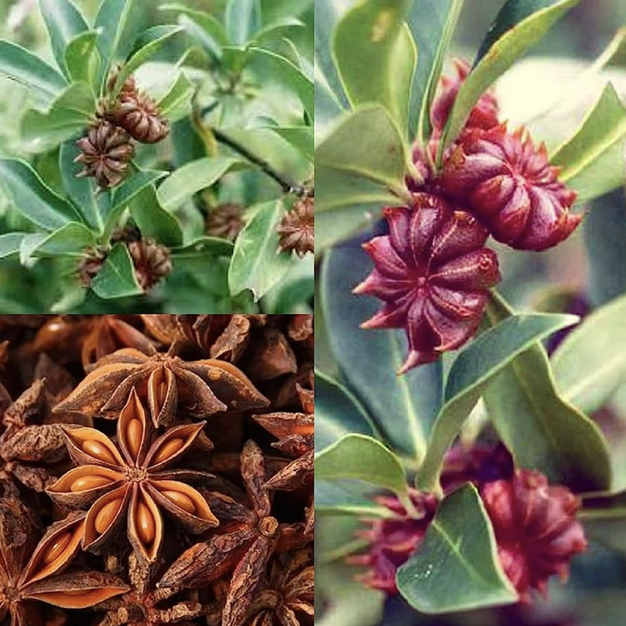
Illicium verum
Actions:
Antiviral, Digestive Stimulant, Antioxidant, Anti-inflammatory, Anti-fungal, Antibacterial, Immune Enhancing, Analgesic, Local Anesthetic, Soporific
Therapeutic Categories:
Influenza, Flatulence, Maintains hormonal balance, Relieves pain, Rheumatism, Immune system, Cardiovascular disease, Lower blood sugar, Respiratory Relief, Skin care, Bronchitis, Diabetes, Insomnia
Safety:
Avoid use in children, Japanese star anise (Illicium anisatum) is poisonous.
Magical Uses:
Protection, luck, and psychic awareness
Plant Parts Used: Seed pod (Fruit)
Preparations: Seasoning, teas
Energetics: Warm, Dry
____________________________________________
Plant Identifiers: Leaves are aromatic, simple and lanceolate, obovate-elliptic or elliptic. Flowers are solitary, pink to dark red. The perianth has lobes 7–12, arranged spirally; stamens number of 11–20, arranged spirally, with short, thick filaments; carpels usually 8, free, arranged in a single whorl. Flower peduncle tepals number range from seven to twelve, and are broadly elliptic to broadly ovate. Fruit is capsule-like, star-shaped, reddish-brown, consisting of six to eight follicles arranged in a whorl (Each boat-shaped), rough and rigid, color reddish-brown, with 1 seed, opening along the ventral edge when ripe. hard and wrinkled, containing one seed.
Also known as: badian, Chinese star anise, star anise seed, star aniseed and star of anise
Chemical Constituents: protein, fatty oil, crude fiber, sugar, starch, ash, Choline